


Recruitment keeps coming up in my conversations, but the conversation has changed. A few years ago everyone was talking about labour shortages. Today the UK jobs market looks very different. Vacancies have fallen below 700,000 for the first time since 2021, there are around two and a half unemployed people for every vacancy, and the number of people on payrolls is down by more than 100,000 on last year. At the same time, a run of large employers have announced major redundancy programmes as they cut costs and restructure, often citing AI. Fewer roles are opening up, and plenty of good people are being let go.
So is employer branding still worth the effort? I'd argue it matters more now than it did then. Here's why.
Firstly, a looser market doesn't make it easy to hire the right people. The businesses I spend time with in professional services, construction and the agency world still struggle to find people with the right skills and the right values. What's changed is that they now get far more applications, many of them polished with AI, and fewer of them fit. Volume isn't the problem. Fit is.
Secondly, uncertain markets hide retention problems. When people watch colleagues being made redundant and see fewer roles advertised, they stay put. Some of your best people might be sitting tight, quietly unhappy, waiting for the market to pick up. When it does, you'll find out very quickly who believed in your culture and who was simply waiting.
And thirdly, the way people research you as an employer has changed completely. Candidates now ask ChatGPT, Gemini or Claude what it's like to work at your company, and they read your Glassdoor reviews long before they read your careers page. Your reputation as an employer is being written whether you take part or not.
If businesses are to have half a chance of recruiting and retaining the best people, then they must get off on the front foot, positioning themselves as an employer of choice. But how?
A solid employer branding strategy is essential to becoming an employer of choice. But the foundations of employer branding start from the inside, which is where many businesses are completely missing the mark. Telling the world your business is a great place to work counts for very little. You need to practise what you preach by demonstrating clear and consistent evidence of your culture if you want to attract and retain the right people.
And this goes well beyond recruitment. Usually when it comes to last-minute recruitment, you're too late. Not having a strategy to nurture your organisational culture, and develop a first-class employee experience, often results in poor staff retention and a vicious cycle of hire-lose-hire. Treat the root cause, not the symptom.
Building a good employer brand starts with identifying how happy and engaged employees already are, building a cohesive plan to improve this across the whole employee lifecycle, before finally establishing how to clearly communicate this culture to future employees. Build an employer brand that your current employees love, and everything else gets a lot easier.
What is an employer brand?
Similar to the way a corporate brand works (which offers a value proposition to customers, defining products or services in the marketplace), an employer brand includes the market's perception of your business as an employer, but also describes your promise (or employee value proposition) to employees in exchange for their skills, experience and talents.
Employer branding is simply how you market your business to future potential employees and job seekers. Once you have a clearly defined and authentic culture in place, you do this by showcasing your business's unique points of difference, amplifying them through communication to position yourself as a great place to work.
Done well, an employer brand will communicate that your business is a good employer and a great place to work, not only cementing your culture and motivating existing employees, but also attracting new motivated employees who are compelled to join your tribe. And when authentic employer brands really flourish, you begin to see employees sharing their positive experiences with their networks, which amplifies the brand to clients, customers, stakeholders, and potential future employees.
There's a newer twist too. Your employer brand now lives in two places: the story you tell, and the summary AI tools stitch together from everything written about you, from review sites and LinkedIn to news articles and your own website. If you only look after the first, the second will fill in the gaps for you, and it won't always get them right. More on that in Step 9.
What is an employer value proposition (EVP)?
It's hard to know where to start with employer branding, but an employer value proposition encompasses your company's mission, values, and culture, and is a great place to start.
Think of it as a value exchange. Your company's EVP is everything that you can offer an employee, in return for the skills, experience, talent and connections they bring to the table. Now put yourself in a skilled employee's shoes. They bring a wealth of knowledge and an impressive track record to the table, and all you can offer them is a salary that's slightly below market rate, no career progression and no additional perks. There's a value imbalance that doesn't add up.
That's why establishing a well-designed employer value proposition is so important. It can attract and retain the best people, help with objective and goal setting, re-engage dispassionate workforces, improve company-wide performance and reduce costly hiring.
The messaging you use to broadcast your employer brand should go much deeper than a list of perks and benefits. That's a job description! It should be a collection of well-considered component parts that make up the whole experience of working in your company. These should be identified, defined, and tested with your current team in a collaborative way. Here are a few examples to consider:
-
Company moral code and guiding principles (do's and don'ts)
-
Company vision
-
Company values and culture
-
Company location and facilities
-
Salary and compensation, and how pay decisions are made
-
Hybrid and flexible working policies, written down in plain language
-
Ongoing employee recognition
-
Professional and personal development
-
Career progression
-
Team structure and communication style
-
Quality of work
-
Approach to mental wellbeing
-
Benefits and perks
-
Sustainability and environmental policies
-
Stance on social issues
-
Job security
-
How AI will change roles, and the training you'll give people to adapt
-
The interview and onboarding experience
What makes a good employer brand?
The employee market is constantly changing, and employee needs are no different. As the world moves, what employees want from their working experience does too. So it's important for businesses to shape their policies, processes and culture to match.
There's no one-culture-fits-all solution, but there are a few key trends worth paying attention to:
1. Be open about pay, then compete on everything else
Of course people find salary important. But there are other, more meaningful elements of a job that people value, and that's true across every age group I work with. People are not workhorses. They're multi-faceted and have passions, hobbies and responsibilities to pursue outside of work.
Someone will always have deeper pockets, and be willing to offer slightly more in terms of compensation, so competing on salary alone doesn't leave you in a very good position. What has changed is that hiding pay no longer works. Just over half of UK job ads now include a salary. Since 7 June 2026, the EU Pay Transparency Directive has required employers to share pay ranges before interview, which applies to UK businesses with staff in the EU, and the UK government has been gathering evidence on similar measures here. And if you don't publish your pay, AI tools will happily guess it for candidates, often badly.
So publish your salary ranges, explain in a sentence or two how pay is set and reviewed, and then make your case on the deeper motivations of why a person might want to join your team. Your EVP should be unique, compelling and tuned into those motivations, going way beyond the basic compensation.
2. Employees have purpose
Employees are aware of the current roster of potentially catastrophic challenges that face humanity, and they expect their employers to be aware of this also.
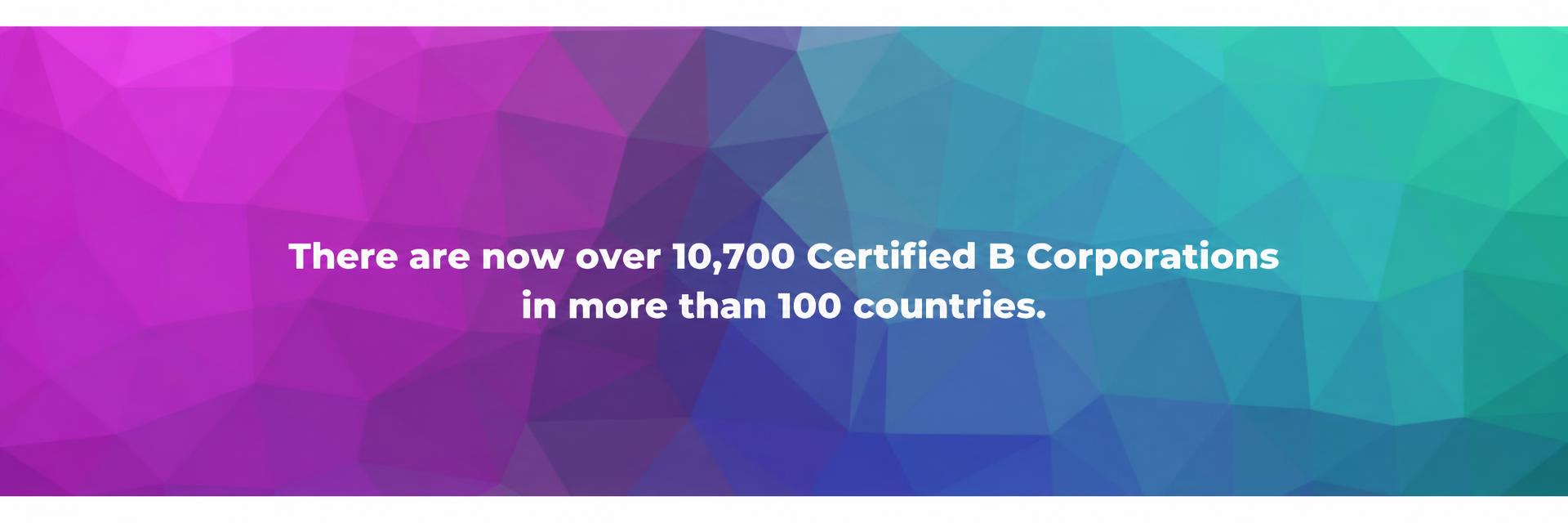
You may not be in a position to change the world with the work you do as a company, but employees do expect you to be doing your bit, and rightly so! Whether it's a commitment to learning about social causes, evaluating your environmental impact, implementing ESG, or looking closer at your governance through commitments like becoming a B Corp, employees want to work in a company that has an acute level of awareness about its impact on the world, and they want to know that what they are doing matters.
People have also become much sharper at spotting purpose-washing. A values page with no evidence behind it will do you more harm than good. A practical approach I like: publish one thing you've changed because of your values, and one thing you're still working on. Being honest about the gap builds far more trust than a polished claim.
Employees also want to know that you recognise their efforts, and that the part they play in the company contributes to the wider impact it has on the world. Having good processes in place for recognition is important to attracting and retaining good people. It's less about money, and more about meaning.
3. People want progression, or they'll look for it elsewhere
People are more future-thinking than ever before. In recruiting and retaining the best people, it's imperative that you communicate with clarity the career progression opportunities that exist in your organisation.
This matters even more when fewer roles are opening up. When fewer roles are opening up elsewhere, moving up inside your business becomes the main route forward, and people will judge you on how visible that route is. Publish a simple progression framework: the levels, what's expected at each one, typical timescales, and how pay moves between them. Add a line on how AI is likely to change roles in your business and what you'll do to help people adapt. People are anxious about this, and silence reads as bad news.
It's important to look at the whole employee lifecycle. When a person is evaluating joining your company, they need to be able to see how their career can develop into the future.
4. Flexibility has to be written down
Hybrid working is now normal, which means "flexible working available" tells a candidate nothing. They want specifics. How many days in the office? Are there core hours? Can people work condensed hours? What happens around school runs or caring responsibilities?
Write your policy down in plain language and publish it. Vague policies breed rumours, and rumours end up in reviews, which end up in AI answers. One 2026 study found outdated remote working policies were among the most common things AI tools got wrong about employers. If the real answer isn't written down anywhere, you can hardly blame the robots.
The employer branding process
So we have chatted through the basics, but here's a step-by-step guide on how to get started. I've added four steps since I first wrote this, because the places where people form an opinion of you as an employer have multiplied.
Step 1. Diagnosis

This is an incredibly important step, because if your employer brand lacks authenticity, employees will see right through it and avoid you with a barge pole.
Looking within, and seeking to understand and define your company's unique attributes, is the first step in developing an employer brand.
Being sure to involve key stakeholders and reviewing your vision, mission, values, and culture as a business is the first step in the process. Understanding what your company objectives are, what type of business you want to build, what success looks like, how you are going to get there and what sort of team is required to achieve this is of vital importance.
I facilitate workshops to help define these core elements of a brand's culture. Before the workshop, I'll usually run short one-to-one conversations with the leadership team and a few people from across the business, using questions like these:
-
What do we want to be known for as an employer in three years' time?
-
What sort of person thrives here, and who struggles?
-
Why did the last three good people who left, leave?
-
What would we never do, even if it made us money?
-
If our best employee described this place to a friend over a pint, what would they say?
The answers rarely match perfectly, and that's the point. The gaps between what leaders think and what the team experiences are where the real work is.
Step 2. Audit your employer brand
You may already know how your brand is perceived by customers, but you may not be as aware of how your company is viewed by your current employees or by potential employees in the job seekers' market.
Engaging in conversation with your team to establish how they feel about your culture, and to evaluate the strengths and weaknesses of the employee experience, is a great starting point. Leading on from this valuable exercise, you can look externally at the market's perception of your brand. Here's the checklist I use:
-
Run a short anonymous survey. Include the employee net promoter question ("How likely are you to recommend us as a place to work, from 0 to 10?") plus two open questions: what should we keep, and what should we change?
-
Hold stay interviews with long-serving people and recent joiners. Ask why they stay and what would tempt them to leave. Exit interviews tell you why people went; stay interviews tell you in time to do something about it.
-
Go back through your exit interview notes from the last 12 to 24 months and look for patterns.
-
Read every review on Glassdoor and Indeed, and group them into themes. Pay more attention to the patterns than the one-off rants.
-
Search for yourself as a candidate would. Try "[company] reviews", "[company] salary" and "working at [company]".
-
Ask the AI tools. Ask ChatGPT, Gemini, Claude and Perplexity what it's like to work at your company. Note what they get right, what they get wrong, and where they say they got it from. (Step 9 goes into this in detail.)
-
Survey recent candidates, including the ones you turned down. How you treat people you don't hire says a lot about you.
Then put the inside view next to the outside view. Where they match, you have strengths to amplify. Where they don't, you have a to-do list.
Step 3. Define your employer value proposition
Defining your employer value proposition is a bit of an art. How do you curate a message that clearly communicates the unique elements of your workplace and your culture?
The most efficient way to do this is through expert facilitation. I select exercises that draw out the unique quirks and benefits of a culture, before consolidating them into a clear value proposition.
It's possible to do this yourself, with a whiteboard, post-its, and a good cross-section of employees, but my advice would be to hire a wordsmith to condense your thoughts down into a powerful value prop afterwards.
I'd aim for three to five pillars, each backed by proof points: a policy, a number, or a real story from someone on the team. Then put every pillar through three tests:
-
Could a competitor put their logo on it? If so, it's too generic. "We value our people" fails. "Every project team includes someone in their first two years, and they present to the client" passes.
-
Would a new starter recognise it after three months? If not, you're describing who you want to be rather than who you are.
-
Can you prove it? If there's no evidence, it's an aspiration. Either invest to make it true, or leave it out until it is.
Step 4. Develop your guiding policies
Once you have a clear understanding of your employer value proposition, a logical next step is to define and record how you will act as an employer. I like to think of this as your brand's moral code, and it's a fun exercise to do with your team.
In Step 1, while exploring your employer brand, we covered values, which are simply the descriptive words or phrases that encapsulate how you act as a brand. Your guiding policies are an extension of these values and create the basis of a decision-making framework for what you will and won't do as a brand.
For example, one of my guiding policies is:
"We start with an accurate diagnosis, then we create a strategy, and then we create brand assets that align with the strategy. Everything we create must fix something."
"Everything we create must fix something" is one of our core values, and by building it out into a guiding policy, it provides a clear framework for everyone to build into their day-to-day decisions. When it comes to creating something, internally or for a client, they critique it to make sure it solves a business need.
Guiding policies are the rules that you live by as a brand, so make sure that they are well written and easy to understand.
Step 5. Build engagement among current employees
To help you become a trusted employer, look no further than your current team. Your employees shape your company's culture, live your values, achieve your objectives, and manifest your company's mission. Without their participation, your employer brand would be nothing.
When potential employees are doing their due diligence on a job, it's your team they're likely to reach out to about culture and the role.
Here are a few ways to get your people more engaged with your employer brand:
-
Hone the message. Use a set of words or phrases that become part of the company's vernacular, as a way to describe your values and what the experience of working for your company is all about. Keep it simple, clear, informative, and unique. Use this language in HR and recruiting meetings, and on your careers pages, recruiting sites, social media accounts, and anywhere else your employer brand can be leveraged.
-
Regularly monitor culture. Your EVP isn't a one-off exercise. Your culture is forever evolving and requires constant attention, discussion and tweaking to keep it fresh, authentic and relevant. Monthly, quarterly or twice-yearly stakeholder sessions to review culture and policies are important to maintain an employer brand that has genuinely been developed with employee consultation. A simple rhythm works well: a two-question pulse survey each quarter, and a proper review of the EVP once a year.
-
Foster professional and personal development. One of the best ways to develop skills in your organisation is to encourage career development. By investing in courses, training, and learning opportunities for your team, you will strengthen your culture and your customer experience. What's more, your team will be proud to share their development publicly, which communicates your employer brand as one that invests in its people.
-
Close the loop. When people tell you something in a survey, tell them what you heard and what you're doing about it, even if the answer is "not yet, and here's why". Nothing kills engagement faster than feedback that disappears into a void.
Step 6. Share it with potential candidates
Job descriptions are often the first contact candidates have with your company, so they're a perfect way to promote your employer brand. Taking all of the unique elements that make up your workplace, culture and brand, you can now craft an engaging and compelling job description that stands out in a sea of competition.
Be sure to take your time when writing a job description and avoid the common pitfalls, such as not including a salary range, not clearly articulating employee benefits, and not conveying your culture and brand personality through careful use of language and tone of voice. You want your job advert to speak to your ideal employee, so make sure it's crafted in a way that speaks to members of your tribe who share the same values and characteristics.
Beyond the job ad, a few practical things make a big difference:
-
Make your careers page answer the real questions: salary ranges, your hybrid policy, how progression works, what the interview process involves and how long it takes. If a candidate has to email you to find out, many won't bother.
-
Publish your interview process step by step, with rough timescales. It reduces anxiety and shows respect for people's time.
-
Reply to every applicant. In a market where you might get hundreds of applications, this is where many employers let themselves down. A clear, kind "no" with a timeline costs you very little.
-
Offer feedback to anyone who reaches interview. Rejected candidates talk too, and they leave reviews.
Step 7. Develop thought leaders
People trust people more than they trust logos. When a candidate is weighing you up, a thoughtful post from one of your engineers about how they solved a tricky problem on site will do more for your employer brand than any careers video. It shows the quality of the work, the calibre of the people, and that you give them a voice.
Thought leadership also feeds the AI tools candidates are using. Named experts writing in their own words about their field give those tools something specific and credible to draw on when someone asks what your company is like.
Here's how I'd go about it:
-
Activate thought leadership across a proper range of your team. Don't make it all about the CEO. Start with two to four people, and choose them for the range they represent: different teams, levels, tenures and backgrounds. A senior leader brings authority; someone two or three years into their career is far more relatable to the people you're trying to hire. Candidates should be able to find a voice that sounds like them, not just a voice that sounds like the boardroom.
-
Widen the circle on purpose. Ask who isn't being heard and put them forward for the next panel, podcast or guest article. Some people need an invitation more than a nudge, and the quiet engineer with a great story is often the best thing you have.
-
Give each person one topic they own. Link the topics back to your EVP pillars. If one of your pillars is how you develop people, your head of learning might write about what you've learned from your apprenticeship scheme. If it's quality of work, a project lead might break down a recent project, the good bits and the bits that went wrong.
-
Help them find their voice, don't write for them. It's tempting to hand this to the marketing team or a tool and slap someone's name on it. Readers can tell, and it undermines the very authenticity you're trying to build. Instead, run a monthly content clinic: thirty minutes where people bring a rough idea and leave with a clear angle. Interview them and give them their own words back as a starting point.
-
Set a sustainable rhythm. One substantial piece a month beats a burst of daily posts that fizzles out by week three. Working out loud counts too: a short post on something they learned this week, a photo from a site visit, a lesson from a mistake.
-
Protect the time. If thought leadership is something people squeeze in at 10pm, it won't last. Build an hour or two a week into their objectives, and recognise it in reviews.
-
Open the doors to bigger stages. Speaking slots at industry events, podcast guest spots, panels, guest articles in trade press and mentoring roles all build personal and company reputation at the same time. Keep a shared list of opportunities and help people put themselves forward.
-
Celebrate the people, not the company. When someone gets a speaking slot or writes something that lands, shout about them. People are far more likely to keep going when their effort is seen.
Step 8. Build advocacy and champions
With an authentic culture that your employees believe in, it's more likely that they will want to proactively talk about the brand. Company news, job opportunities and updates are much more powerful when shared by individuals in your company than on your company channels alone. Your team's combined networks are many times larger than your company page's following, and their posts reach people who would never follow a company account.
The key word is want. Advocacy only works when it's voluntary. The moment it feels like a duty, it reads like a duty.
Build a champions network. Invite volunteers from different teams, levels and locations to act as your employer brand champions. Meet every month or two. Ask them what's working, what's not, and what stories they're hearing. They're your early-warning system as much as your amplifiers.
Give them a toolkit, not a script. Share the facts they need (open roles, salary ranges, your hybrid policy, recent wins), good photography and short story prompts. Never hand people pre-written posts to copy and paste. Nothing screams "forced" like twenty identical posts going out on the same morning.
Make referrals easy and rewarding. Your people know who would fit in. A simple referral scheme with a clear reward, and a quick thank-you whatever the outcome, turns your team into your best recruiters.
Tell real stories on your own channels. Short profiles on your careers page, with the person's own words, a real photo and what their week actually looks like. Include people who've grown into new roles. Progression stories are proof that your EVP is true.
Treat leavers well. People who leave on good terms become advocates, referrers, sometimes clients, and sometimes they come back. Keep in touch through a light-touch alumni group and a proper send-off.
Encouraging and managing employee reviews
Glassdoor and Indeed reviews are often the first thing a candidate reads about you, and AI tools draw on them heavily. You can't control what people say, and you shouldn't try. What you can do is make sure the picture is complete, current and fairly represented. Here's what that looks like in practice.
Get your house in order first.
- Claim your free employer profiles on Glassdoor and Indeed. Add an accurate description, your benefits, real photos, your values and a link to your careers page.
Read every existing review before you ask for new ones, and fix the obvious issues people raise. Asking for reviews while ignoring the old ones looks tone deaf.
Ask everyone, at the right moments.
-
Ask your whole team, not just the happy ones. Cherry-picking produces a profile that looks curated, and candidates can spot it a mile off.
-
Pick natural moments. After someone's been with you for around 90 days, after a promotion or a project wraps up, or once a year as part of your culture review. Brand-new starters don't know enough to give a useful review.
-
Ask new joiners about their interview experience during onboarding, while it's fresh.
-
Explain why it matters. Tell people honest reviews help the right candidates find you and help you improve. Make it clear that critical reviews are welcome.
Never do these.
-
Never offer incentives. No gift cards, prize draws, extra holiday or bonuses for reviews. It breaks Glassdoor's community guidelines, incentivised reviews get removed, and Glassdoor may post an alert on your profile if it sees employers trying to manipulate their reviews. In the UK, fake reviews and concealed incentivised reviews became banned practices under the Digital Markets, Competition and Consumers Act in April 2025, with fines of up to 10% of global turnover. That law is aimed at consumer reviews, but the direction of travel is obvious, and if you're paying for praise you've already lost the argument about authenticity.
-
Never pressure people or ask for proof that they've posted. Glassdoor protects reviewers' anonymity, and asking for screenshots breaches its rules.
-
Never try to identify who wrote a review. Hunting for a critic is the fastest way to prove the critic right.
-
Never write reviews yourself, or ask friends or staff to pose as employees or customers.
Respond well, especially to the tough ones.
Respond to every review, positive and negative, within a couple of weeks. Glassdoor gives employers a free response and the last word, so use it.
Sign it from a named person, ideally someone senior. "The HR team" feels like a wall.
Thank them, acknowledge the point, and say what's changing. For example: "Thanks for taking the time to write this. You're right that our onboarding hasn't kept up with how quickly we've grown. Since the summer, every new starter has a named buddy and a 30-day plan, and we review it with them at the end of their first month."
Don't get defensive, don't argue the detail, and never reveal anything that could identify the reviewer.
Only flag reviews that genuinely break the guidelines, such as someone who never worked for you or content that names individuals. Flagging reviews simply because they're negative backfires.
Close the loop internally.
Once a quarter, share the main themes from your reviews with the team and say what you're doing about them. Your reviews are free, honest research. Treat them that way, and over time the reviews themselves will start to reflect the changes you've made.
Step 9. Stay visible in AI search
This is the biggest change since I first wrote this piece. A growing number of candidates now start their research by asking an AI tool, rather than typing your name into Google. "Is [company] a good place to work?" "What do engineers earn at [company]?" "What's the interview process like?" The answer they get back is a summary of whatever the tool can find about you, and it shapes their view before they've ever visited your website.
One 2026 study by PerceptionX, an employer brand research firm, surveyed around 300 job seekers across seven countries including the UK. Almost all of those who use AI had used it to research employers, over half had asked it whether a company was worth pursuing, and more than half had caught it getting something wrong, such as outdated remote working policies or incorrect salary data. Most said what AI told them, or what they found when they checked it, had changed their mind about a company. It's a small study from a company that sells a solution to this problem, so take the exact numbers with a pinch of salt. But the direction matches what I'm hearing from candidates and clients alike.
The good news is that AI tools can only work with what's out there. You can't control their answers, but you can make sure they have accurate, specific and up-to-date material to draw from. Here's how.
- Find out what the AI tools say about you now. Write down ten questions a candidate might ask, for example:
-
What's it like to work at [company]?
-
What do [role] earn at [company]?
-
Does [company] offer hybrid working?
-
What's the interview process at [company]?
-
How does [company] treat its staff?
-
Who are the best [industry] employers in [city or region]?
Run them through ChatGPT, Gemini, Claude, Perplexity and Google's AI answers. Record the answers in a simple spreadsheet, note what's wrong or missing, and note which sources they cite. Repeat every quarter so you can see whether things are moving.
-
Fix the problem at the source. If an AI tool says you're office-based five days a week when you're hybrid, the tool is getting that from somewhere. Look at the sources it lists. It might be an old job ad on a jobs board, an out-of-date LinkedIn page, a three-year-old article or a cluster of old reviews. Update what you control, and ask third parties to update what you don't.
-
Answer the real questions on your own website, in plain language. AI tools favour clear, specific, well-structured answers. Your careers page should answer the questions candidates actually ask, using those questions as headings. Salary ranges by role or level. Your hybrid policy, written out. How progression works. What the interview process involves and how long it takes. What benefits you offer, in detail. Add a "last updated" date so both people and machines can see it's current.
-
Make it easy for machines to read. Put important information in plain text on the page, not locked inside images, videos or PDFs. Ask your web developer to add structured job data to your vacancy pages (known as JobPosting markup), including salary. Make sure the same facts appear the same way everywhere: your website, LinkedIn, Glassdoor, Indeed and your job ads. Inconsistency confuses people, and it confuses AI tools too.
-
Earn mentions from others. AI tools give weight to what other credible sources say about you, so third-party coverage matters. Awards and accreditations (including directories like the B Corp directory), features in trade press, podcast appearances, talks at industry events and partnerships with universities or industry bodies all add to the picture. This is where Step 7 pays off twice.
-
Be specific. "Great culture and competitive salary" gives an AI tool nothing to work with. "Four-day week trial since January, salary bands published for every role, average tenure of six years" gives it something real to repeat.
-
Don't try to game it. Hidden text, keyword stuffing, fake reviews or flooding the web with thin AI-written content might work for a moment, but they tend to be found out, and when they are, the damage to trust is far worse than the problem you were trying to fix. The only durable strategy is to be a genuinely good employer and to describe it accurately.
Step 10. Measure what's working, and keep going
If you don't measure your employer brand, it quickly becomes a nice-to-have that gets cut the moment budgets tighten. Pick a small number of measures and track them every quarter:
-
Retention: staff turnover, and especially how many people leave in their first year.
-
Engagement: your employee net promoter score and pulse survey trends.
-
Quality of hire: the share of applicants who meet your criteria, and how new starters are performing after six months. In a high-volume market, quality matters far more than quantity.
-
Offer acceptance rate: if good candidates are turning you down, find out why.
-
Referral share: the percentage of hires that came through your own people. It's one of the clearest signs your team believes in your culture.
-
Review health: your average rating, the number of recent reviews and the themes coming through.
-
AI accuracy: how many of your ten questions the AI tools answer correctly, tracked quarter by quarter.
Share the numbers with your leadership team and your champions network. When people can see the impact, they keep investing in it.
Need some help?
What people want from today's brands is authenticity; for brands to actually be what they claim to be. Purpose and values aren't decided upon in a board meeting; they are discovered and evidenced. That's even more true now that candidates can check your claims in seconds.
I help businesses reflect their brand behaviourally, tonally and visually, with strategies that keep their future decisions coordinated, focused and authentic.
A big part of brand strategy is authentic culture, and employer branding plays a crucial role in this. If you would like to explore how brand strategy can help you develop an employer brand, email me at leefitzpatrick18@gmail.com.